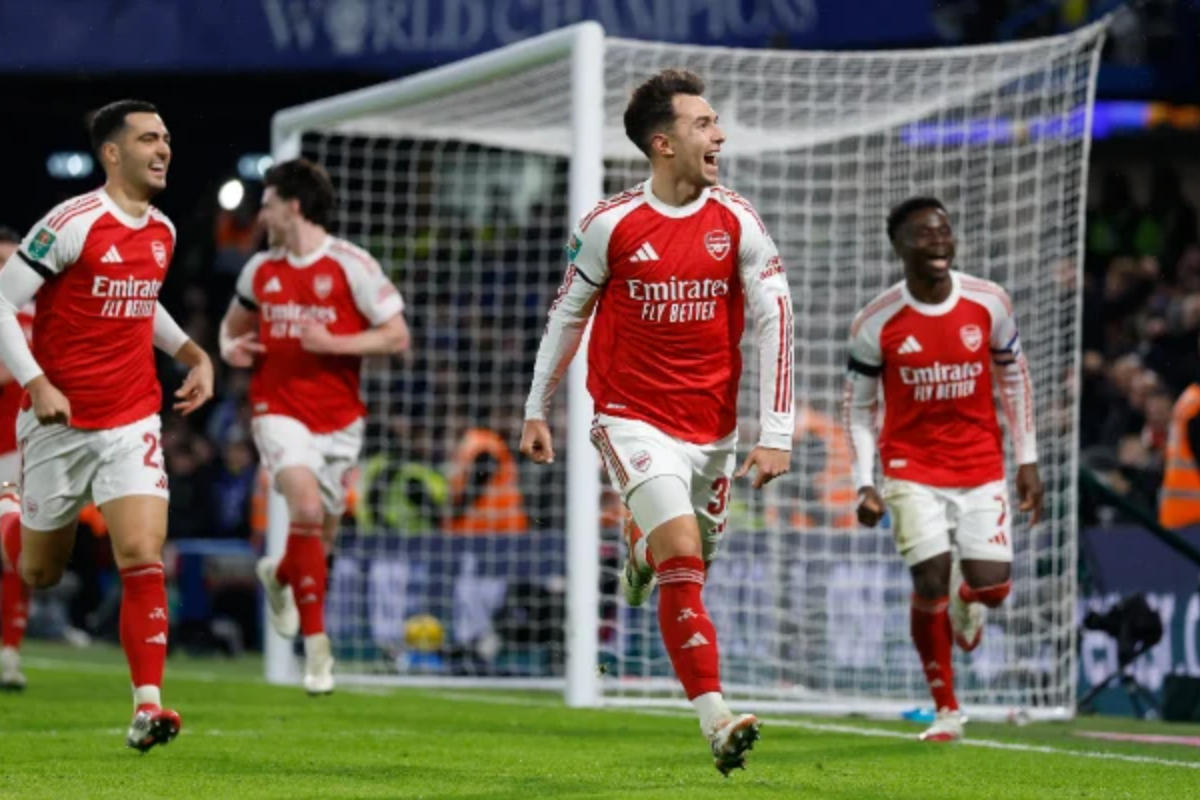
The first leg of the Chelsea Arsenal EFL Cup semi-final served as a fascinating study in contrasting managerial philosophies. Mikel Arteta’s Arsenal arrived with a refined, treble-chasing system characterized by positional fluidity and suffocating high-pressing. Conversely, Liam Rosenior, making his home debut, was forced into a reactive “backs-against-the-wall” setup due to critical absences like Cole Palmer and Moises Caicedo. The wet conditions at Stamford Bridge added a layer of unpredictability to the ball’s physics, yet for 70 minutes, the match followed a strict tactical script dictated by the Gunners’ superior structural organization and midfield control.
The Set-Piece Engine: Arsenal’s 24th Strategic Strike
Arsenal’s opening goal was not a product of luck, but of a highly specialized coaching department. Ben White’s 7th-minute header originated from a Declan Rice corner, utilizing a “blocker” scheme that left White unmarked at the near post. This marked Arsenal’s 24th set-piece goal of the 2026 season, a metric that places them at the pinnacle of European efficiency. Chelsea’s zonal marking system struggled to track late runners, a recurring vulnerability that Rosenior will need to address before the return leg at the Emirates.
Tactical Performance Metrics: Semi-Final First Leg
| Tactical Category | Arsenal (Arteta) | Chelsea (Rosenior) |
|---|---|---|
| Formation | 4-3-3 (Hybrid) | 4-2-3-1 (Low Block) |
| Set-Piece Efficiency | 1 Goal (Rice Delivery) | 0 Goals (Defensive Lapses) |
| High Press Success | 82% Recovery Rate | 45% Recovery Rate |
| Key Substitutions | Mikel Merino (Control) | Alejandro Garnacho (Chaos) |
| Defensive Anchor | William Saliba (Elite) | Robert Sanchez (Erratic) |
Goalkeeping Volatility and the Breakdown of the Low Block

The second half exposed the fragility of Chelsea‘s defensive shape under sustained pressure. Robert Sanchez’s “grotesque” handling error in the 49th minute—spilling a routine ball to Viktor Gyökeres—dismantled Chelsea’s tactical morale. This individual mistake forced Rosenior to abandon his conservative low block earlier than planned. By pushing the defensive line higher to chase the game, Chelsea left gaps in the half-spaces, which Martin Zubimendi exploited with a clinical 71st-minute finish to make it 3-0.
- Robert Sanchez mistake cost Chelsea against Arsenal: A fundamental error that forced a mid-game tactical pivot.
- Who scored for Arsenal in the 3-2 win over Chelsea: White (set-piece), Gyökeres (rebound), and Zubimendi (open play).
- Midfield Dynamics: Martin Zubimendi’s role as a “deep-lying pivot” allowed Arsenal to recycle possession at a 64% clip.
The Garnacho Variable: Chaos Theory in Transition

Liam Rosenior’s most effective tactical adjustment was the introduction of Alejandro Garnacho. Replacing the isolated Marc Guiu, Garnacho acted as a transitional outlet that bypassed Arsenal’s counter-press. His two goals (57’ and 83’) were products of direct verticality rather than intricate buildup. By targeting the space behind Arsenal’s marauding full-backs, Garnacho exposed a rare lack of recovery speed in the Gunners’ transition defense, successfully turning a tactical blowout into a competitive 3-2 contest.
VAR Intervention and the Post-Match Disciplinary Collapse – Chelsea Arsenal EFL Cup

The match’s tactical integrity dissolved in the 94th minute during a controversial penalty sequence. Gabriel Jesus’s run was perfectly timed for a direct pass, but the assistant referee’s marginal offside call—confirmed by VAR—denied Arsenal a 4-2 advantage. This decision was the catalyst for the post-match “handbags” at the tunnel entrance. Tensions between Enzo Fernandez and Zubimendi illustrated the psychological toll of the Chelsea Arsenal EFL Cup rivalry, where tactical frustration often boils over into physical confrontation after the final whistle.
- Why was there a fight after Arsenal Chelsea EFL Cup: High-intensity midfield duels and the late rescinded penalty.
- Alejandro Garnacho goals Chelsea substitute impact: A tactical masterstroke that utilized pace against a tired high line.
- Mikel Arteta reaction: Frustration at his side’s failure to manage the “game state” in the final fifteen minutes.
Conclusion: Analyzing the Stakes for the Second Leg – Chelsea Arsenal EFL Cup
While Arsenal leaves the Bridge with a statistical advantage, the tactical momentum is surprisingly balanced. The 3-2 scoreline suggests that while Arteta’s system is more refined, it remains susceptible to the high-velocity individual brilliance that Chelsea possesses in Garnacho. As we look toward February 3, 2026, the focus will shift to Chelsea’s injury report and Arsenal’s ability to tighten their transitional defense. This Chelsea Arsenal EFL Cup semi-final remains a “live” tactical puzzle that will only be solved at the Emirates.
About the Author