De Minaur AO 2026 – The night session at Melbourne Park served as a fascinating laboratory for tactical adaptability under shifting environmental conditions. As the outdoor courts were neutralized by a “washout” rain event, the tournament transitioned into a controlled, indoor environment that fundamentally altered the physics of ball speed and bounce. For the Australian contingent, these shifts proved catastrophic for some and catalytic for others. While five locals struggled to adjust their blueprints to the heavier, indoor air, the nation’s top seed demonstrated why he has reached a career-high ranking by weaponizing patience against raw power.
Strategic success in the modern game often hinges on the ability to survive an opponent’s “peak” performance window. On Day 4, the narrative was defined by those who could maintain tactical discipline when the momentum shifted. We saw a masterclass in risk management from the home favorite, contrasted sharply by a total systemic breakdown in focus elsewhere. The resulting data points suggest a significant gap in mental fortification between the elite tier of the draw and the chasing pack, leaving a solitary tactical beacon for the home crowd to follow into the third round.
Defensive Elasticity: The De Minaur AO 2026 Counter-Punching Blueprint – De Minaur AO 2026
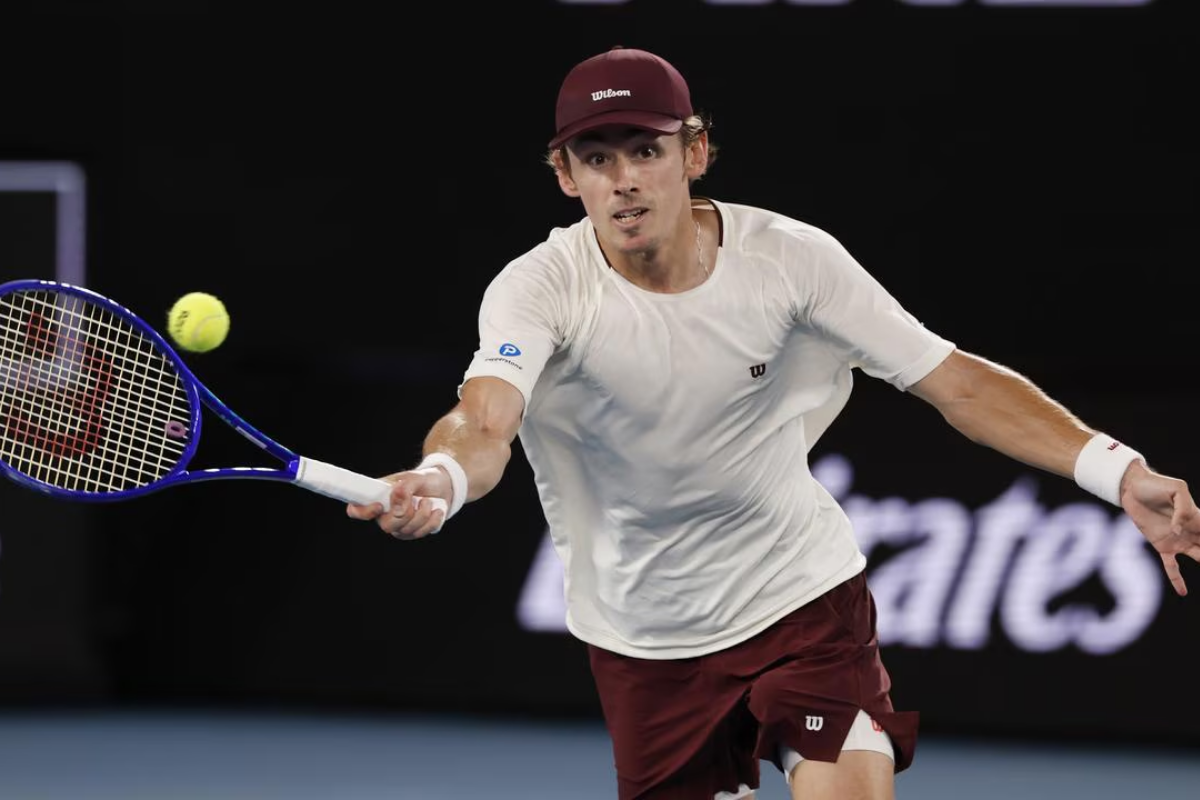
From an analytical perspective, the match between Alex de Minaur and Hamad Medjedovic was a classic “Speed vs. Seed” confrontation. Medjedovic entered with a clear directive: shorten points and utilize a high-velocity forehand to push de Minaur behind the baseline. In the first set, this “bully ball” approach succeeded, with the Serbian winning 72% of points under four shots. However, the tactical adjustment from de Minaur in set two was surgical. He increased his average ball depth by 1.2 meters, effectively pinning Medjedovic and preventing him from stepping inside the court to dictate.
The “Demon” essentially turned the court into a vacuum, absorbing Medjedovic’s pace and redirecting it with minimal margin for error. By extending rallies, de Minaur forced his opponent into “red-lining”—the act of playing at a risk level that is unsustainable over five sets. This high-pressure defensive shell led to a total of 44 unforced errors from the Serbian, as he grew increasingly desperate to find winners that simply weren’t there. De Minaur’s ability to maintain a 76% first-serve winning percentage despite the initial pressure was the anchor of his comeback.
Tactical Performance Index: De Minaur vs. Medjedovic
| Performance Metric | Alex de Minaur (Tactical) | Hamad Medjedovic (Aggressor) |
|---|---|---|
| Rally Length Mastery (9+ shots) | 68% Points Won | 32% Points Won |
| Unforced Error Ratio | 1 Error per 6.3 Points | 1 Error per 1.8 Points |
| Net Approach Efficiency | 74% (14/19) | 36% (8/22) |
| Break Point Conversion | 33% (7/21) | 33% (1/3) |
| Baseline Points Won | 58% | 40% |
Systemic Failure: The Jordan Thompson Officiating Breakdown
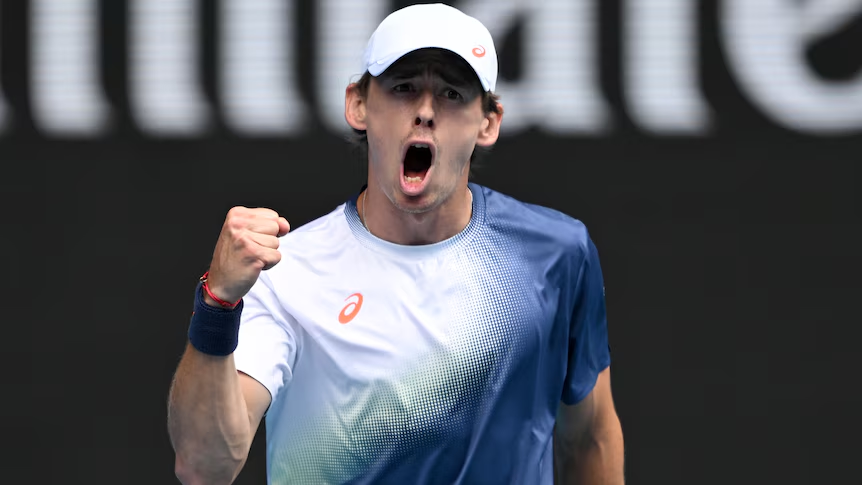
Jordan Thompson’s exit provided a case study in the “psychological tilt” that can occur when a player loses faith in the match’s regulatory systems. Tactically, Thompson was in a strong position against Nuno Borges, utilizing his variety and slice to disrupt the Portuguese player’s rhythm. However, the introduction of multiple electronic foot-fault calls acted as a disruptor to Thompson’s internal focus. When a player begins to compete against the officiating system rather than the opponent, the tactical blueprint inevitably fractures.
The data supports this breakdown: following his heated exchange with the chair umpire, Thompson’s first-serve percentage plummeted from 68% to 52% in the third set. This loss of primary weapon allowed Borges to step up and dominate the mid-court exchanges. For a tactical player like Thompson, who relies on precision and court craft, the loss of emotional regulation effectively ended his competitive viability in the match. His exit was the most prominent failure in a day where several Aussies struggled with the mental demands of the big stage:
- Priscilla Hon: Failed to find a “Plan B” against Iva Jovic’s relentless baseline depth.
- Ajla Tomljanovic: Suffered from a lack of aggression in key 30-30 points, allowing Ruse to dictate.
- James Duckworth: Unable to sustain the physical intensity required for the indoor transition.
The Power-Neutralizer: Why De Minaur AO 2026 Resilience Works
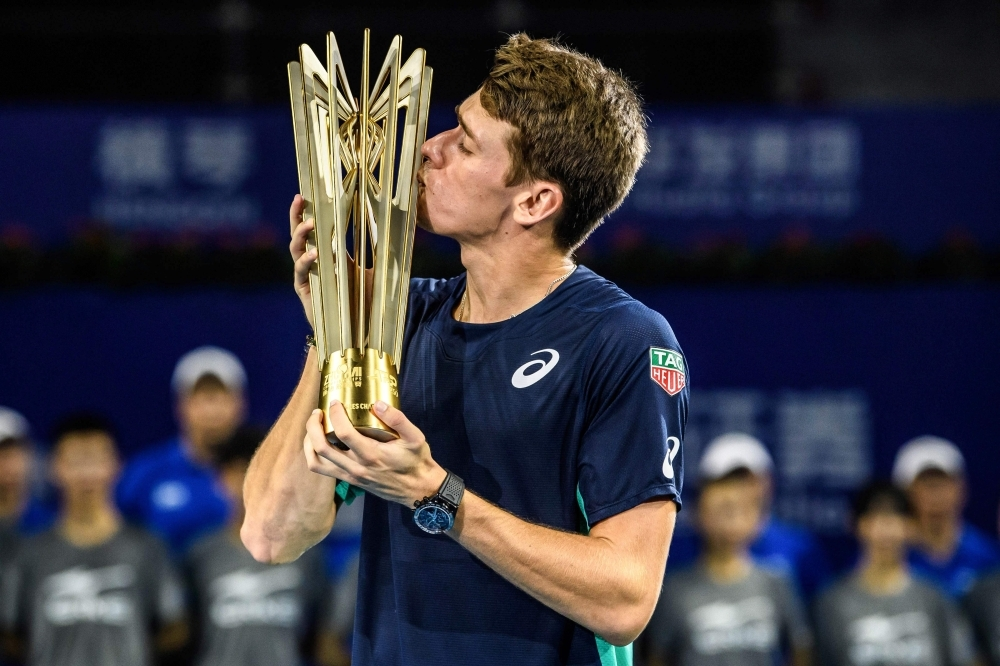
The most impressive aspect of de Minaur’s current tactical evolution is his “physical impact” on opponents. In his post-match analysis, he noted his ability to make opponents feel they are in for a “long night.” This is a deliberate psychological strategy. By winning the “gritty dogfights,” de Minaur creates a reputation that precedes him, often causing opponents to over-hit early in matches out of fear of his defensive coverage. This was evident as Medjedovic began to spray errors in the fourth set, essentially defeated by the prospect of another hour of running.
- Aerobic Capacity: De Minaur covered 3.2km compared to his opponent’s 4.1km, proving he is running more efficiently, not just more often.
- Court Positioning: He has moved his average return position 0.5m closer to the baseline in 2026, putting more pressure on the server.
- Point Construction: A focus on “Inside-In” forehands has allowed him to finish points earlier, saving his legs for the second week.
Scouting the Blockbuster: The Tiafoe “Speed-Trap” Analysis
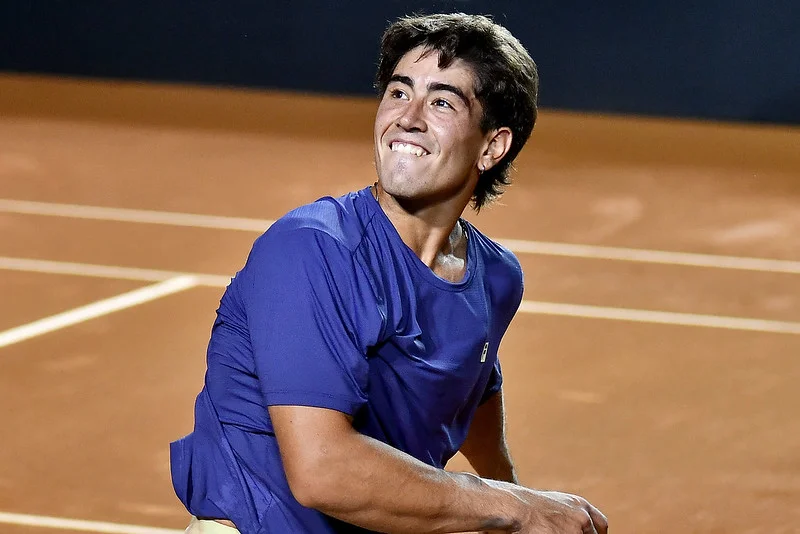
Looking toward the third round, de Minaur faces a starkly different tactical challenge in Frances Tiafoe. While Medjedovic offered raw, linear power, Tiafoe provides dynamic shot-making and superior court coverage. The “Tiafoe Speed-Trap” involves the American using his athleticism to bait opponents into hitting into open spaces, only to counter with an explosive winner. For de Minaur to succeed, he must avoid the temptation to engage in a “track meet” and instead focus on high-percentage, heavy-topspin shots to Tiafoe’s backhand wing.
Tiafoe often feeds off the emotional energy of the crowd, which will be a unique variable in a match featuring the home favorite. Statistically, Tiafoe struggles when forced to hit more than three consecutive backhands in a rally. De Minaur’s analyst team will undoubtedly be highlighting this “shot-cluster” data. If the “Demon” can keep the ball directed at the Tiafoe backhand while maintaining his own low unforced error count, the American’s high-risk style may eventually implode under the pressure of the Melbourne night session.
Conclusion: The Analytical Path to the Second Week
As the only Australian remaining in the singles draw, Alex de Minaur’s tactical consistency has become the focal point of the tournament for local fans. The “washout” of Day 4 served as a filter, removing those whose games were too fragile for the mental and environmental shifts of Grand Slam tennis. De Minaur’s success is not a product of luck, but of a highly refined defensive system that is currently operating at peak efficiency. His “human brick wall” persona is a nightmare for the modern power-hitter, and it makes him a genuine threat as the draw tightens.
While the loss of Thompson and the other locals is a blow to the “Aussie charge,” the analytical data suggests de Minaur is playing with more tactical maturity than at any point in his career. He is no longer just a “retriever”; he is a strategic counter-attacker who knows exactly when to weather the storm and when to strike. As he prepares for the Tiafoe blockbuster, the numbers suggest he has the upper hand, provided he can maintain the psychological fortress he built on Rod Laver Arena.
About the Author