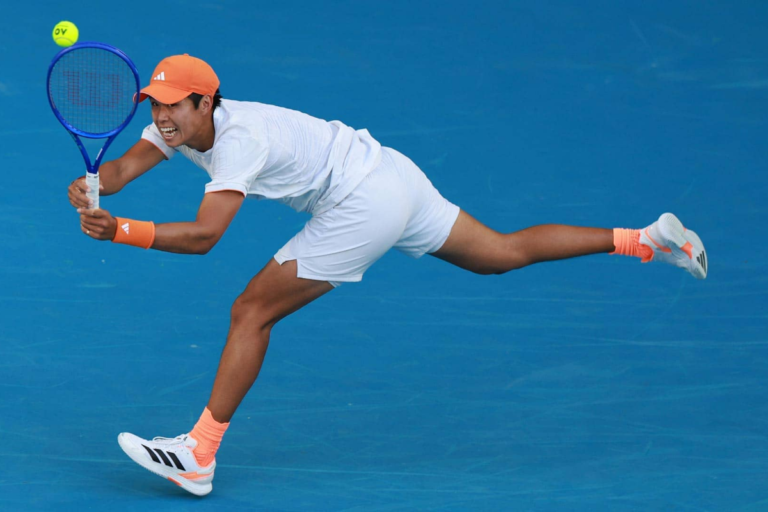
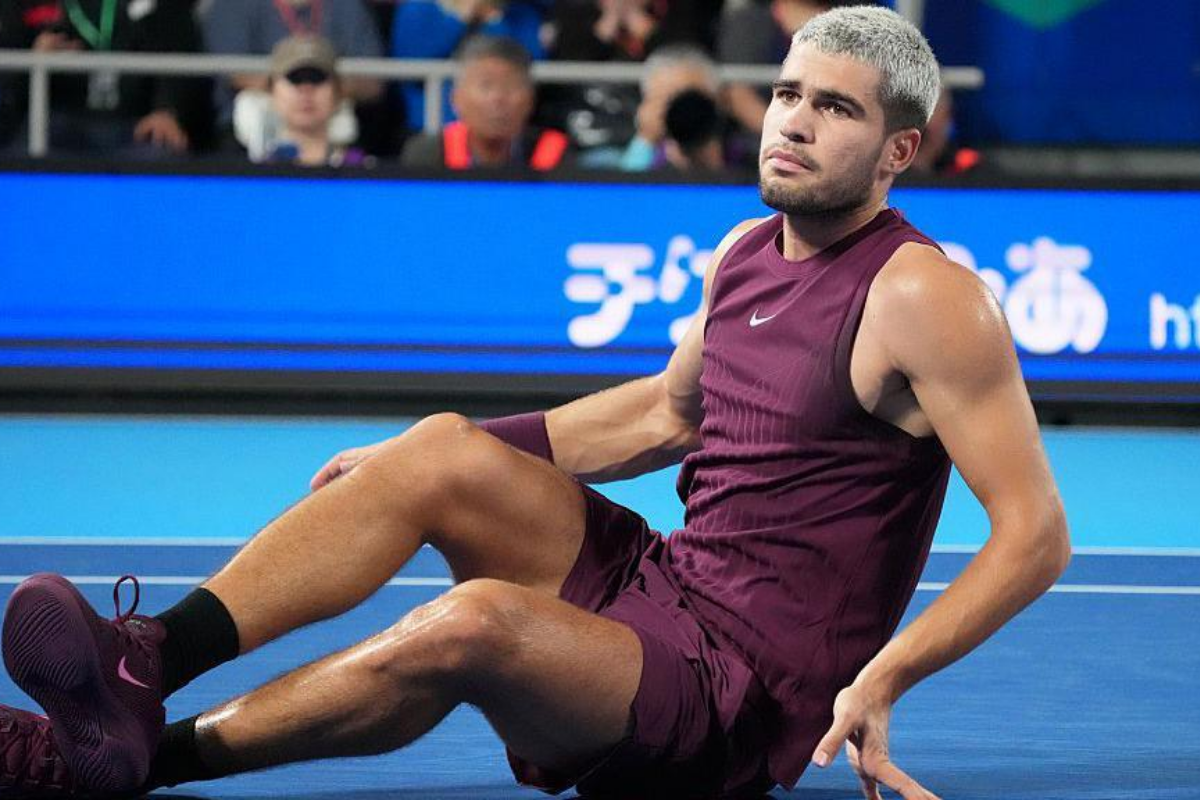
The launch of the Alcaraz Australian Open 2026 campaign provided a fascinating window into the technical evolution of the world’s top-ranked player. While the victory over Adam Walton was expected, the “how” was far more intriguing than the result itself. Entering the tournament with a fresh coaching perspective, Alcaraz displayed a more disciplined approach to point construction. The focus wasn’t merely on highlight-reel winners but on a high-percentage game plan designed to withstand the grueling two-week journey toward a career Grand Slam.
Serving Efficiency: The Samuel López Impact
The most glaring statistical shift in Alcaraz’s game was the reliability of his service motion. Under the guidance of Samuel López, the Spaniard has tightened his toss and improved his placement, particularly on the “T” and out wide. Against Walton, this manifested in a dominant 76% of first-serve points won, allowing him to hold serve with minimal exertion. This efficiency served as the bedrock of his performance, neutralizing Walton’s aggressive return positioning and keeping the Australian on the defensive throughout the two-hour contest.
Performance Analytics: Service and Return Data
| Metric | Carlos Alcaraz | Adam Walton |
|---|---|---|
| Set Scores | 6-3, 7-6, 6-2 | 3-6, 6-7, 2-6 |
| Aces Recorded | 8 | 3 |
| 1st Serve Points Won | 76% | 61% |
| Total Winners | 42 | 19 |
| Match Duration | 2h 05m | 2h 05m |
Baseline Geometry and Depth Control
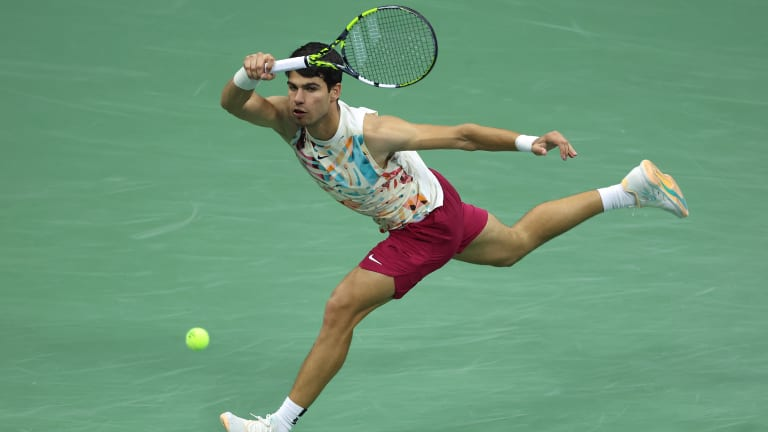
A key tactical component of the Alcaraz Australian Open 2026 opener was Alcaraz’s ability to manipulate the court’s geometry. By maintaining an average groundstroke depth significantly deeper than his opponent, he forced Walton into difficult, defensive positions. Even during the second-set lapse where unforced errors crept in, Alcaraz’s recovery was rooted in high-margin tennis:
- Heavy topspin forehands aimed at Walton’s backhand wing.
- Strategic use of the drop shot to disrupt Walton’s rhythm.
- Relentless pressure on the second serve, winning 54% of those return points.
Navigating the Post-Ferrero Transition – Alcaraz Australian Open 2026
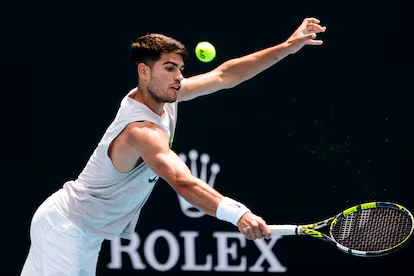
The tennis world remains focused on the “New Era” following Alcaraz’s split from Juan Carlos Ferrero. Analyzing the player box behavior, it is clear that Samuel López is prioritizing a “routine-first” philosophy. Rather than the constant tactical adjustments seen in previous seasons, Alcaraz appeared more autonomous, trusting his instinctual shot-making while adhering to a stricter physical recovery plan between points. In his post-match press conference, Alcaraz noted that the decision to change coaches was about starting a “new chapter” focused on mental independence on the court.
Championship Trajectory and Rivalry Outlook – Alcaraz Australian Open 2026
From an analyst’s perspective, this performance sets a high bar for the rest of the draw. While defending champion Jannik Sinner also impressed on Day 1, Alcaraz’s ability to handle the “home-crowd” pressure against an Australian wildcard suggests his focus is absolute. The potential path forward looks favorable, though tactical adjustments will be necessary if he faces a variety-heavy opponent like Corentin Moutet in the third round. Alcaraz is currently winning the “efficiency battle,” spending minimal time on court while showcasing maximum firepower.
Conclusion: A Data-Driven Statement in Melbourne – Alcaraz Australian Open 2026
Ultimately, the Alcaraz Australian Open 2026 debut was a masterclass in controlled aggression. By blending improved service mechanics with his trademark baseline dominance, Alcaraz proved he has the technical tools to secure the one Major title that has remained elusive. The numbers don’t lie: with 42 winners and a revamped serve, the Spaniard is playing at a level that demands perfection from his rivals. As the tournament moves into the second round, the blueprint for Alcaraz’s success has been clearly laid out on the blue courts of Melbourne.
About the Author