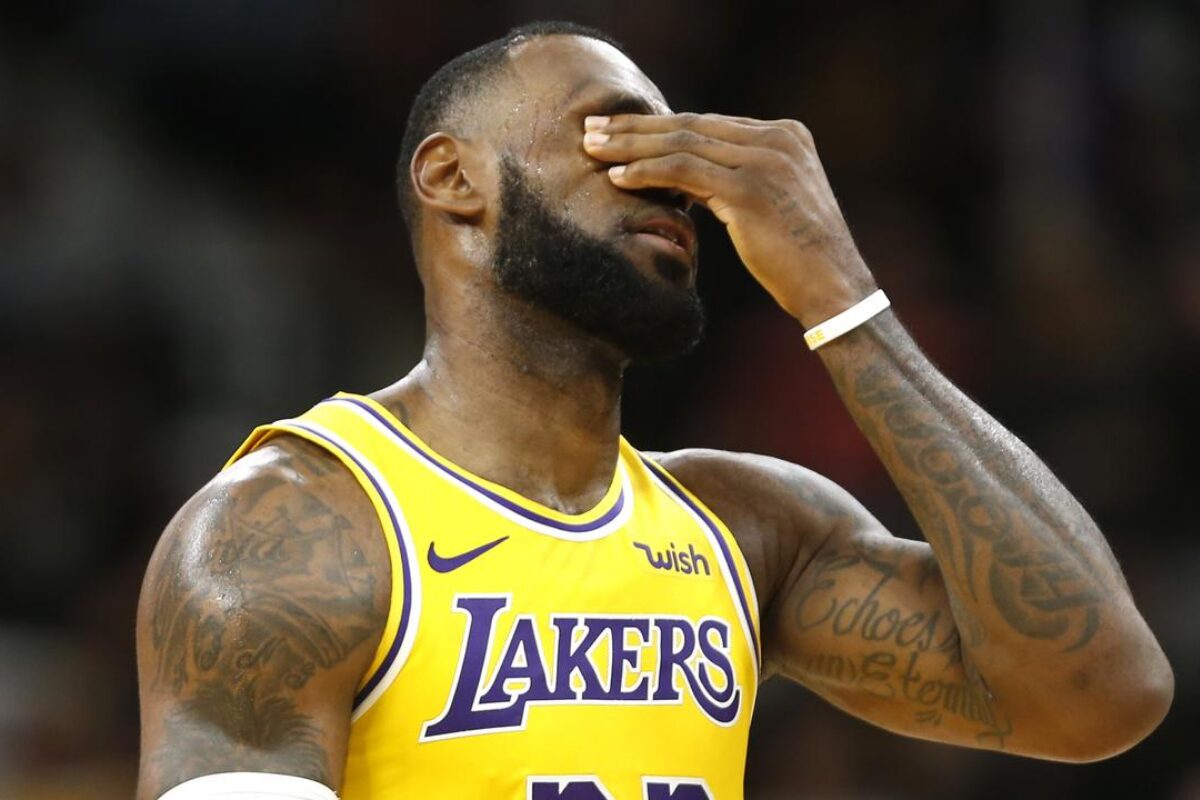
The ending of LeBron James’ 1,297-game double-digit scoring streak arrived not with a collapse, but with a tactical redirection of the Lakers’ offense. For the first time in 18 years, the game plan required LeBron James under 10points, and the coaching staff leaned into a different configuration of spacing, ball-handling, and late-game decision-making.
Toronto’s defensive scheme positioned long wings at the nail, complicating LeBron’s traditional driving windows. His response was not to hunt forced scoring, but to distribute, orchestrate, and preserve the structure that kept Los Angeles competitive. The streak ending became a subplot — the strategic chessboard became the story.
How the Lakers Adapted Without Dončić and With a Passive-Scoring LeBron
With Luka Dončić out, Los Angeles needed new ball-dominant solutions. Rather than shifting that load to LeBron, the Lakers reorganized their offensive hierarchy. Toronto adjusted early, pinching LeBron’s lanes and forcing the Lakers to work through secondary creators.
Here’s how each key player’s tactical role unfolded:
| Player | Tactical Function | Example of Impact |
|---|---|---|
| Austin Reaves | Primary initiator, high-usage scorer | Attacked drop coverage for repeated pocket pull-ups |
| Rui Hachimura | Weakside spacing anchor | Timed relocation to the corner for the game-winner |
| Deandre Ayton | Screening, rim protection | Flattened Toronto’s switches with deep seals |
| Jake LaRavia | Rotational defender, cutter | Exploited Toronto’s ball-watching in zone gaps |
| LeBron James | Decision-point facilitator | Triggered late-game actions without forcing shots |
Reaves’ 44-point performance wasn’t merely hot shooting — it was a structural necessity. With Toronto committing extra help to LeBron, Reaves became the release valve, punishing over-rotations and mismatches.
The Final Possession: Why the Assist Was the Optimal Tactical Decision
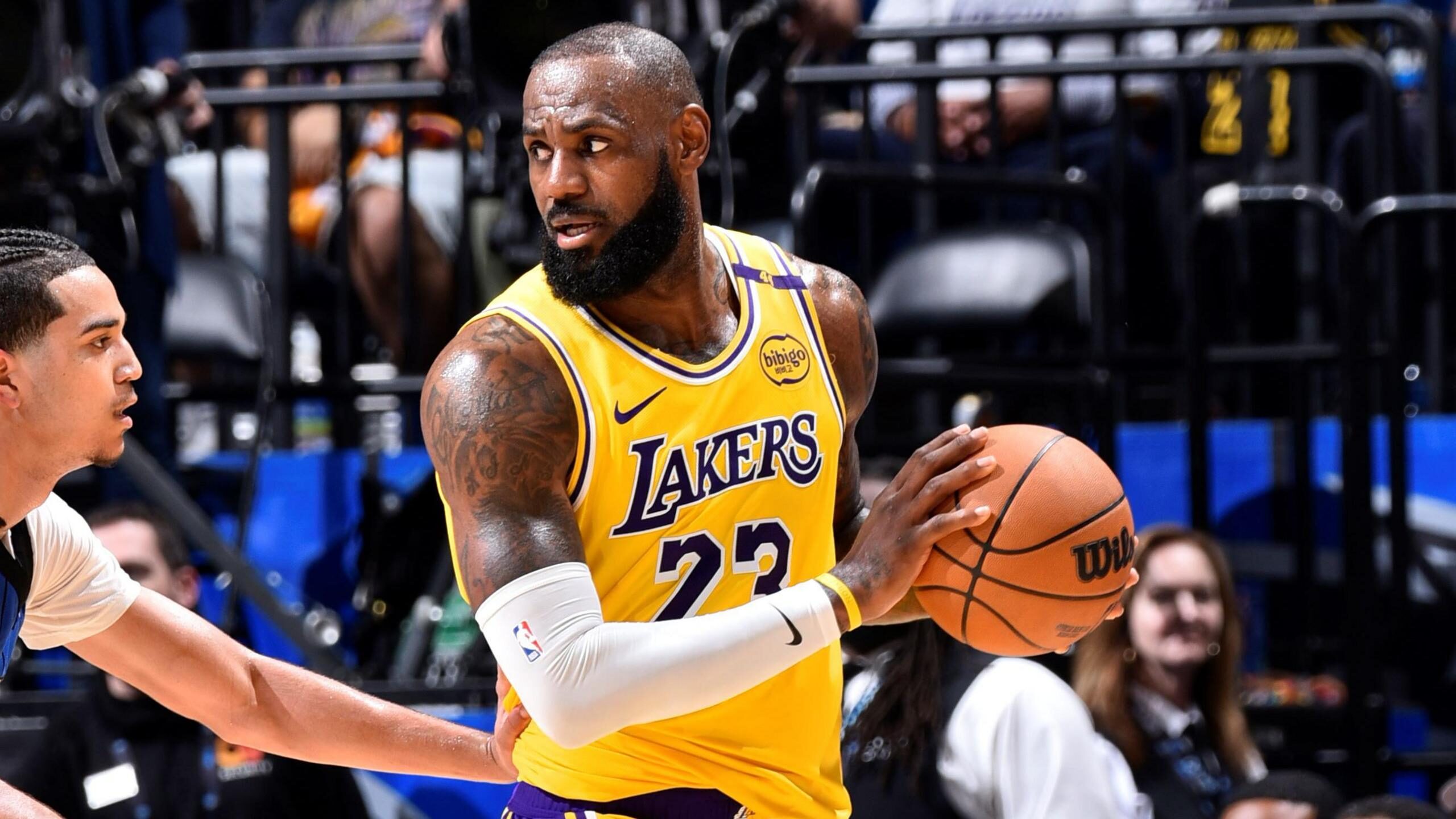
With the game tied, the Lakers flowed into a spread formation that isolated LeBron above the break. Toronto loaded early help from the strong side, telegraphing that a contested pull-up was the shot they wanted him to take. LeBron rejected that option instantly.
Instead, he shifted middle, forcing the Raptors to collapse the interior and tagging both corner defenders. This manipulation allowed Rui Hachimura to fade into the corner — the exact window Los Angeles anticipated when they initiated the set.
The reasons the pass was the correct tactical choice:
• The Raptors’ nail defender was positioned high, eliminating the driving lane.
• The low man overcommitted to the paint, leaving the corner vulnerable.
• Hachimura had the highest shot-quality metric among the available options.
• LeBron’s release angle allowed the pass to beat the rotation by half a step.
The play wasn’t about unselfishness alone — it was about maximizing probability. The streak ended, but the decision aligned with everything the Lakers built into their late-game offense.
Why Toronto’s Scheme Held LeBron James Under 10points
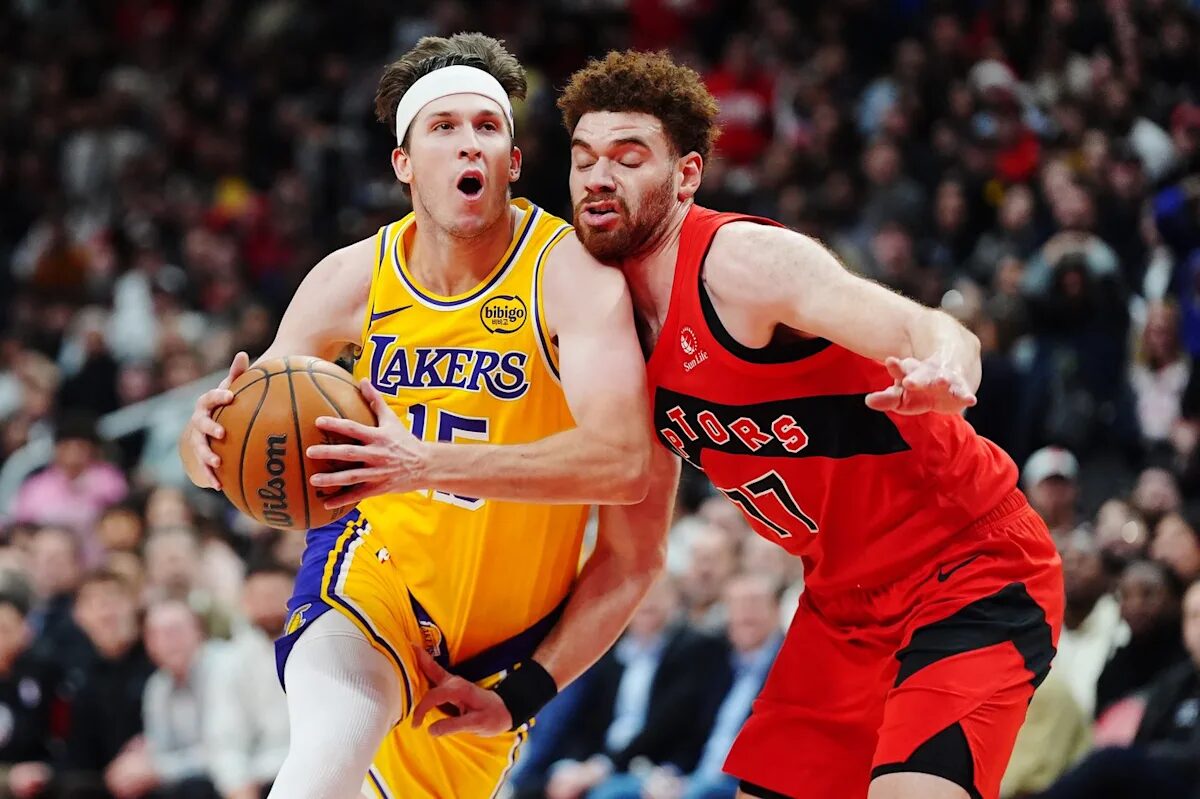
Toronto executed one of the season’s most disciplined defensive game plans against LeBron. Their priority was to restrict rim access and avoid giving him momentum-based finishing angles. They succeeded through layered coverage:
• Shade coverage at the elbows to cut off drives
• Quick stunts from the strong-side wing to influence pull-ups
• Drop bigs absorbing contact early to prevent free-throw opportunities
• Pre-switches to avoid mismatches on early screens
Combine that with LeBron’s own physical limitations — rust from missed games, nerve irritation affecting his first step, and reduced lift — and the scoring dip became a predictable outcome rather than a sudden collapse.
His 4–17 shooting, 0–5 from deep, and zero free throws were symptoms of a night where the scheme and his physical state intersected. But his tactical contribution remained significant: communicating late switches, adjusting spacing around Reaves, and preserving offensive tempo.
As the season continues, the Lakers may shift more scoring responsibility to Dončić and Reaves while using LeBron as the connective piece — the stabilizer rather than the primary scorer.
Conclusion: A Tactical Era Begins as a Scoring Era Closes – LeBron James under 10points
The headline — LeBron James under 10points — will circulate for its historical weight, but the film tells a different story. Even without scoring, LeBron influenced the flow, structure, and outcome of the game. His pass secured the win. His defensive reads prevented breakdowns. His restraint preserved spacing for others.
The streak ended, but the Lakers’ strategic identity widened. As Los Angeles sits near the top of the Western Conference, the blueprint ahead is clear: diversify creation, enhance spacing, and allow LeBron to evolve into a role that values precision over volume.
This wasn’t an ending — it was the beginning of a new tactical phase in a career defined by adaptation.
FAQs
About the Author